Music / folk

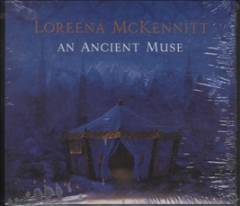
An ancient muse


Description


"Det er for billigt at affærdige Loreena McKennitt som en canadisk Enya, for hendes musik skabes med rigtige musikere og rigtige instrumenter, og hun blander græske og tyrkiske inspirationer ind i de keltiske ... An Ancient Muse er storslået, køn, længselsfuld og fuld af dvælende momenter".

Content

Latest edition,

Incantation

The gates of Istanbul

Caravanserai

The English ladye and the knight

Kecharitomene

Penelope's song

Sacred shabbat

Beneath a Phrygian sky

Never-ending road = Amhrán duit


Periodica

The article is a part of

The articles in  are frequently about

Articles with same topics

In


Articles

All registered articles grouped by issue

...

...

...

...

...

Reviews (4)


Gaffa [online]

d. 18. Dec. 2006

By

By

Ole Rosenstand Svidt

d. 18. Dec. 2006

"Den musikalske ækvivalent til Ringenes Herre".


AllMusic

2006

By

By

James Christopher Monger

2006

"An Ancient Muse may break little new ground for McKennitt, but it won't disappoint longtime fans. Her fascination with Celtic, Mediterranean, and Middle Eastern instrumentation (hurdy-gurdy, nyckelharpa, kanoun, uilleann pipes, bouzouki, lyra, and oud) and her preoccupation with mythology and poetry have won her great favor with the new age/adult alternative crowd, and rightly so, as Irish-tinged ballads such as "Never-Ending Road (Amhrán Duit)" and "Penelope's Song" are just Enya songs with more instruments than vocal tracks. Her penchant for quality instrumentals, in this case the Turkish delights "Kecharitomene" and "Sacred Shabbat," sets her apart from the more stereotypical new age artists".


Jyllands-posten

d. 30. Nov. 2006

By

By

Jakob Lambertsen

d. 30. Nov. 2006

"Det er for billigt at affærdige Loreena McKennitt som en canadisk Enya, for hendes musik skabes med rigtige musikere og rigtige instrumenter, og hun blander græske og tyrkiske inspirationer ind i de keltiske ... An Ancient Muse er storslået, køn, længselsfuld og fuld af dvælende momenter".


High fidelity (Kbh.)

Årg. 39, nr. 8 (2006)

By

By

Henrik Ørnstrup

Årg. 39, nr. 8 (2006)