lorem ipsum dolor sit amet ...
Tidsskrift
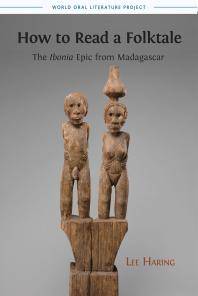
E-bog, 2013
...
...
...
...
...
...
...
...
...
...
...
...
Foreword to Ibonia -- Preface -- 1. Introduction: What Ibonia is and How to Read it -- 2. How to Read Ibonia: Folkloric Restatement -- 3. What it is: Texts, Plural -- 4. Texture and Structure: How it is Made -- 5. Context, History, Interpretation -- 6. Ibonia, He of the Clear and Captivating Glance -- There Is No Child -- Her Quest for Conception -- The Locust Becomes a Baby -- The Baby Chooses a Wife and Refuses Names -- His Quest for a Birthplace -- Yet Unnamed -- Refusing Names from Princes -- The Name for a Perfected Man -- Power -- Stone Man Shakes -- He Refuses More Names -- Games -- He Arms Himself -- He Is Tested -- He Combats Beast and Man -- He Refuses Other Wives -- The Disguised Flayer -- An Old Man Becomes Stone Man's Rival -- Victory: "Dead, I Do Not Leave You on Earth; Living, I Give You to No Man 3. -- Return of the Royal Couple -- Ibonia Prescribes Laws and Bids Farewell Appendix: Versions and Variants -- Text 0, "Rasoanor 3. Antandroy, 1650's. Translated from Étienne de Flacourt (1661) -- Text 2, "Ibonia3. Merina tale collected in 1875-1877. James Sibree Jr. (1884) -- Text 3, Merina tale collected in 1875-1877. Summary by John Richardson (1877) -- Text 6, "The king of the north and the king of the south3. Merina tale collected in 1907-1910 at Alasora, region of Antananarivo. Translated from Charles Renel, Charles (1910) -- Text 7, "Iafolavitra the adulterer 3. Tanala tale collected in 1907-1910 in Ikongo region, Farafangana province. Translated from Charles Renel (1910) -- Text 8, "Soavololonapanga3. Bara tale, ca. 1934. Translated from Raymond Decary (1964) -- Text 9, "The childless couple 3. Antankarana tale, collected in 1907-1910 at Manakana, Vohemar province. Translated from Charles Renel (1910) -- Text 14, "The story of Ravato-Rabonia3. Sakalava, 1970's. Translated from Suzanne Chazan-Gillig (1991) -- Works Cited -- Index
The article is a part of
The articles in are frequently about
In
All registered articles grouped by issue
...
...
...
...
...