Music / jazz

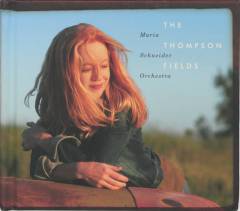
The Thompson Fields


Details


...

...

...

...

...

...

...

...

...

...

...

...


Content

Latest edition, musik (cd)

Walking by flashlight

The monarch and the milkweed

Arbiters of evolution

The Thompson Fields

Home

Nimbus

A potter's song

Lembrança


Periodica

The article is a part of

The articles in  are frequently about

Articles with same topics

In


Articles

All registered articles grouped by issue

...

...

...

...

...

Reviews (4)


All about jazz

d. 2. June 2015

By

By

Dan Bilawski

d. 2. June 2015

"The Thompson Fields arrives (...) eight years after the last Maria Schneider Orchestra album - the stunning Sky Blue. But if it takes Schneider that long to give proper birth to this quality of recorded music, so be it. You can't rush perfection, and this music is as close as you can get to that lofty and unattainable goal. Across these eight tracks, the Maria Schneider Orchestra puts ornithological ideals into play ("Arbiters Of Evolution"), works with nebulous themes and foreboding thoughts ("Nimbus"), takes a trip into Brazilian territory ("Lembranca") (...) and bottles the attractively complex lingering scents of nostalgia and sentimentality ... Maria Schneider is truly fearless in her expression of self, creating grand statements and musical reveries built from intimate memories, thoughts, and feelings. Her willingness to share these experiences, her unparalleled skills at molding them into music, and the talents of the musicians who populate her orchestra all contributetothe success".


The telegraph

d. 11. June 2015

By

By

Ivan Hewitt

d. 11. June 2015

"The Thompson Fields, a decade in the making, shows just what a supple and powerful instrument a jazz orchestra can be".


The New York times

d. 1. June 2015

By

By

Nate Chinen

d. 1. June 2015

"There's a grand naturalist compulsion in Maria Schneider's writing for large ensemble, and it has led her toward a more potent expression of her art ... Duke Ellington set a precedent for capturing the rhythms of life (...) but Ms. Schneider has her own trademark way of using timbre and harmony to bring a tactile presence to the dimensions of sound - and more impressively, of applying the same tools to illuminate emotional terrain ... The orchestra, as a single breathing organism, is Ms. Schneider's instrument, but she also puts a great deal of responsibility on her soloists. So a track called "Arbiters of Evolution" becomes a swaggering concerto for the tenor saxophonist Donny McCaslin, the ensemble surging and receding behind him. Something similar happens with the alto saxophonist Steve Wilson on "Nimbus," an evocation of heavy weather".


Orkesterjournalen

2015 #3

By

By

Peter H. Larsen

2015 #3

"Det finns knappast någon stor ensemble inom jazzen i dag som har en så förfinad orkesterkultur som Maria Schneider Orchestra. Med kultur mener jag musikernas och kapellmästarens/komponistens indbördes intima förståelse för varandras förmåga och visioner ... Schneiders orkester är i det hänseendet, om än helt olik dessa, på nivå med Ellington og Basies berömde orkestrar från 1950- och 60-talen. Just detta demontreras om och om igen på denna utgivning ... Musiken brusar fram i en harmonisk och strukturell rikedom vars textur och frapperande kontrapunkt både lever sitt eget liv och omringar livfullt och utmanar de många förnäma solistiska inslagen".