lorem ipsum dolor sit amet ...
Tidsskrift

Bog, 2002
...
...
...
...
...
...
...
...
...
...
...
...
Part 1 Introduction: brief background to major success in children's books - Blyton, Just William, Tolkien, R.L. Stine, Roald Dahl - reflect different models that work; HP titles have something of all of these about them because of the different genres they straddle. Part 2 What is Harry Potter?: how it is written - the unlikely place of a boarding school story at the end of the 20th century, the construction of the stories with their emphasis on complex plotting, the concept of a group of characters who are growing up, the sense of place, the use of magic and its relationship to the powers of darkness; the imaginative genius and the moments of weakness; what it is saying about - racial tolerance/equality, the importance of family/friends/loyalty, the nature of power, the role of education. Part 3 Beyond the story, why is Harry Potter so much more successful than anything else?: the particular qualities of HP; the ability to speak directly to children as readers; psychological and sociological reasons centering around child-empowerment and a specific understanding of the child's view of the world. Part 4 How was the HP phenomenon achieved?: the dominant role of HP in the last three years and the role of marketing in achieving it; the self-fulfilling effect of over-popular authors in the context of how children choose what they read; the reversing of the norm in which adults rather than children themselves are the initial selectors. Part 5 The Harry Potter effect: how writing for children may be viewed differently after Harry Potter
Artiklen er en del af
Artiklerne i handler ofte om
Fra
Alle registrerede artikler fordelt på udgivelser
...
...
...
...
...
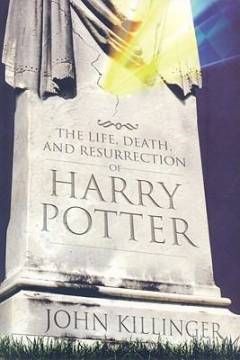
The life, death and resurrection of Harry Potter
John Killinger
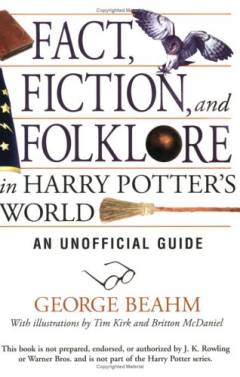
Fact, fiction, and folklore in Harry Potter's world : an unofficial guide
George Beahm
Hvorfor jeg føler det, du føler : intuitiv kommunikation og hemmeligheden ved spejlneuroner
Joachim Bauer
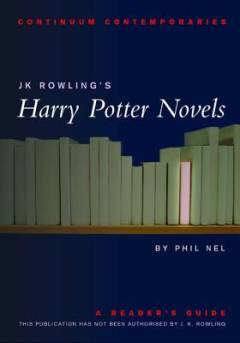
J.K. Rowling's Harry Potter novels : a reader's guide
Philip Nel (f. 1969)

Ryd op og få styr på dit liv : guide til overblik, orden og ny energi
Lisa Butterworth
J.K. Rowling : the wizard behind Harry Potter
Marc Shapiro
Harry Potter and the deathly hallows
Joanne K. Rowling
På kant med klodens klima : om behovet for et ændret natursyn
Ole Jensen (f. 1937)

Kommunikationsfagets håndværk og teori
Children as readers in children's literature : the power of texts and the importance of reading