lorem ipsum dolor sit amet ...
Tidsskrift
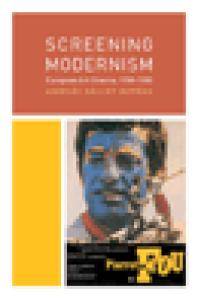
Bog, 2007
...
...
...
...
...
...
...
...
...
...
...
...
Part One: What Is the Modern? 1.THEORIZING MODERNISM: Modern, Modernism, Avant-garde, Cinema and Modernism: The First Encounter, The Institution of the Art Film, Modernist Art Cinema and the Avant-Garde. 2.THEORIES OF THE CLASSICAL/MODERN DISTINCTION IN CINEMA: Style Analysts, Evolutionists, Modern Cinema and Deleuze, Modernism as an Unfinished Project. Part Two: The Forms of Modernism: 3. MODERN ART CINEMA: STYLE OR MOVEMENT? 4. NARRATION IN MODERN CINEMA: Classical versus Modernist Art Films, The Alienation of the Abstract Individual, Who Is “the Individual” in Modern Cinema?, The Role of Chance, Open-Ended Narrative, Narrative Trajectory Patterns: Linear, Circular, Spiral. 5. GENRE IN MODERN CINEMA: Melodrama and Modernism, Excursus: Sartre and the Philosophy of Nothingness, A Modern Melodrama: Antonioni’s Eclipse (1962), Other Genres and Recurrent Plot Elements, Investigation, Wandering/Travel, The Mental Journey, Closed-Situation Drama, Satire/Genre Parody, The Film Essay. 6. PATTERNS OF MODERN FORMS: Primary Formation: Continuity and Discontinuity, Radical Continuity, Imaginary Time in Last Year at Marienbad, Radical Discontinuity, The Fragmented Form according to Godard, Serial Form. 7. STYLES MODERNISM: Minimalist Styles, The Bresson Style, Abstract Subjectivity and the “Model”, Bresson and His Followers, Analytical Minimalism: The Antonioni Style, Psychic Landscape? Continuity, Antonioni and His Followers, Expressive Minimalism 8. NATURALIST FORMS: Post-neorealism, Cinéma Vérité, The “New Wave” Style. 9. ORNAMENTAL FORMS :10. THEATRICAL FORMS: 11. MODERN CINEMA TRENDS: The Family Tree of Modern Cinema, Part Three: Appearance and Propagation of Modernism (1949–1958) ; 12. CRITICAL REFLEXIVITY OR THE BIRTH OF THE AUTEUR: The Birth of the Auteur, Historical Forms of Reflexivity, The Emergence of Critical Reflexivity: Bergman’s Prison, Reflexivity and Abstraction: Modern Cinema and the Nouveau Roman. 13. THE RETURN OF THE THEATRICAL: Abstract Drama. 14. THE DESTABILIZATION OF THE FABULA: Voice-Over Narration, The Dissolution of Classical Narrative: Film Noir and Modernism, Fabula Alternatives: Hitchcock, Alternative Subjective Narration: Rashomon. 15. AN ALTERNATIVE TO THE CLASSICAL FORM : NEOREALISM AND MODERNISM: The End of Neorealism, Modernism in Story of a Love Affair: Neorealism Meets Film Noir, Rosselini: The “Neorealist Miracle”. Part Four: The Short Story of Modern Cinema (1959–1975) 16. THE ROMANTIC PERIOD, 1959–1961: Neorealism: The Reference, Eastern Europe: From Socialist Realism toward Neorealism Heroism versus Modernism, Jerzy Kawalerowicz: The First Modern Polish Auteur, The Year 1959, Forms of Romantic Modernism, Genre and Narration in the Early Years, Sound and Image, Background and Foreground, From Hiroshima to Marienbad: Modernism and the Cinema of the Elite, The Production System of the “New Cinema”. 17. ESTABLISHED MODERNISM, 1962–1966: Western Europe around 1962, The Key Film of 1962: Fellini’s 8 ½, Central Europe, Czechoslovak Grotesque Realism, The “Central European Experience”, Jancsó and the Ornamental Style, Summary 18. THE YEAR 1966: The Loneliness of the Auteur ; 19. POLITICAL MODERNISM, 1967–1975: The Year 1968, Conceptual Modernism: The Auteur’s New World, Reconstructing Reality, Counter-Cinema: Narration as a Direct Auteurial Discourse, The Film as a Means of Direct Political Action, Parabolic Discourse, Teorema, The Auteur’s Private Mythology, The Self-Critique of Political Modernism: Sweet Movie, Summary. 20. “THE DEATH OF THE AUTEUR”: The Last of Modernism: Mirror, Mirror and Serial Structure, The Disappearance of Nothingness; Appendix: A Chronology of Modern Film; Selected Bibliography; Index of Names and Movie Titles ; Theorizing modernism -- Theories of the classical/modern distinction in the cinema -- Modern art cinema: style or movement? -- Narration in modern cinema -- Genre in modern cinema -- Patterns of modern forms -- Styles modernism -- Naturalist styles -- Ornamental styles -- Theatrical systems -- Modern cinema trends -- Critical reflexivity of the birth of the auteur -- The return of the theatrical -- The destabilization of the fabula -- An alternative to the classical form: noerealism and modernism -- The romantic period, 1959-1961 -- Established modernism, 1962-1966 -- The year 1966 -- Political modernism, 1967-1975 -- "The death of the auteur" -- Appendix: A chronology of modern cinema -- Selected bibliography -- Index of names and movie titles
Artiklen er en del af
Artiklerne i handler ofte om
Fra
Alle registrerede artikler fordelt på udgivelser
...
...
...
...
...