lorem ipsum dolor sit amet ...
Tidsskrift
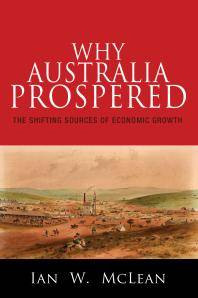
Bog, 2013
Chapter 1 Introduction: Weaving Analysis and Narrative 1 Chapter 2 What Is to Be Explained, and How 11 Comparative Levels of GDP Per Capita 11 Booms, Busts, and Stagnation in Domestic Prosperity 15 Other Indicators of Economic Prosperity 19 From Evidence to Analysis 25 Extensive Growth and Factor Accumulation 27 Growth Theory and Australian Economic Historiography 29 Recent Themes in Growth Economics 32 Chapter 3 Origins: An Economy Built from Scratch? 37 The Pre-1788 Economy of the Aborigines 38 The Aboriginal Contribution to the Post-1788 Economy 42 The Convict Economy and Its Peculiar Labor Market 44 Further Features of the Economy Relevant to Later Prosperity 50 British Subsidies and Australian Living Standards 53 Chapter 4 Squatting, Colonial Autocracy, and Imperial Policies 57 Why the Wool Industry Was So Efficient 58 Evolution of Political Institutions: From Autocracy to Responsible Government 63 The Labor Market: Ending Transportation, Preventing Coolie Immigration 67 Thwarting the Squatters: Land Policies to 1847 69 Other Determinants of Early Colonial Prosperity 73 The Argentine Road Not Taken 76 Chapter 5 Becoming Very Rich 80 The Economic Effects of Gold: Avoiding the Resource Curse 84 Sustaining Economic Prosperity Following the Rushes 90 Consolidating Democracy and Resolving the Squatter- Selector Conflict 96 Openness and Growth 100 Rural Productivity and Its Sources 108 Chapter 6 Depression, Drought, and Federation 113 Explaining Relative Incomes 113 Eating the Seed Corn? 116 Boom, Bubble, and Bust: A Classic Debt Crisis 119 Why Was Recovery So Slow? Comparison with Other Settler Economies 125 Tropics, Crops, and Melanesians: Another Road Not Taken 132 Economic Effects of Federation 135 Accounting for the Loss of the "Top Spot" in Income Per Capita 139 Chapter 7 A Succession of Negative Shocks 144 Why Was the Economic Impact of World War I So Severe? ; 147 Why No Return to Normalcy? 148 Pursuing Rural Development--A Field of Dreams? 154 Growth in Other Settler Economies 157 Debt Crisis, Then Depression-- Policy Responses and Constraints 160 Imperial Economic Links-- Declining Net Benefi ts 165 Could the Post-1960 Mineral Boom Have Occurred Earlier? 170 The Debate over Stagnant Living Standards 173 Chapter 8 The Pacific War and the Second Golden Age 176 Why the Pacific War Fostered Domestic Growth 177 The Golden Age Was Not Uniquely Australian 183 Export Growth, Factor Inflows, and the Korean War Wool Boom 186 Macroeconomic Theory and Policies--What Role? 191 Location Advantage: Asian Industrialization and Changing Trade Partners 193 High Tide for Australian Industrialization 196 Underinvestment in Human Capital? 199 The Debate over Postwar Growth Performance 205 Chapter 9 Shocks, Policy Shift s, and Another Long Boom 210 Why Did the Postwar Economic Boom End? 212 The Reemergence of a Booming Mining Sector 215 Macroeconomic Management in the 1970s 217 Economic Policy Shift s in the 1980s 219 Reevaluations 224 The Quarry Economy: The Return of Resources-Based Prosperity 228 The Contribution of Economic Reforms to Productivity 235 Sustaining Prosperity through Boom and Bubble--A Historical Perspective 241 Chapter 10 The Shifting Bases of Prosperity 246 Appendix Note on Statistics and Sources 257 References 259 Index 277 ; Preface and acknowledgments -- Map -- Introduction : weaving analysis and narrative -- What is to be explained, and how comparative levels of gdp per capita -booms, busts, and stagnation in domestic prosperity -- Origins : an economy built from scratch? -- Squatting, colonial autocracy, and imperial policies -- Becoming very rich -- Depression, drought, and federation -- A succession of negative shocks -- The pacific war and the second golden age -- Shocks, policy shifts, and another long boom -- The shifting bases of prosperity -- References -- Index
Artiklen er en del af
Artiklerne i handler ofte om
Fra
Alle registrerede artikler fordelt på udgivelser
...
...
...
...
...